


The internet has made it possible for almost anyone to publish content and reach a global audience. What used to require printing presses, distribution networks, and advertising sales teams can now be done with a laptop and Wi-Fi. But while publishing has been democratized, profitability has not.
Building and maintaining a content business still costs time, effort, and money. Writers need to be paid, servers need to be maintained, and audiences need to be kept engaged. Somewhere between those millions of pageviews and the endless scroll, publishers must find a way to make the numbers work.
That is where Google AdSense steps in. For two decades, it has been one of the simplest and most widely used ways for publishers to turn traffic into revenue. It is also one of the most misunderstood. On the surface, it looks effortless: you create the content, Google brings the advertisers, and you get paid. But behind that convenience lies an incredibly complex marketplace powered by real-time auctions, audience targeting algorithms, and constantly shifting advertiser demand.
For publishers trying to make sense of digital monetization, understanding how AdSense truly works and what it can and cannot deliver is essential. This isn’t just about placing a few ad boxes on a webpage. It is about understanding how those ads get there, who is paying for them, and how much value they really create for your business.
What is Google AdSense?

Google AdSense is a bridge between two sides of the digital economy: advertisers who want attention and publishers who have it. Advertisers pay Google to show their messages to specific audiences. Publishers make their content and audiences available for those ads. Google sits in the middle, managing the technology, the matching, and the money.
When you sign up for AdSense, you allow Google to fill designated spaces on your website with ads. Those ads come from the millions of advertisers who use Google Ads, the platform where companies bid for visibility across the web. Every time a reader visits your page, Google runs a micro-auction to determine which ad should appear in that space. The advertiser who offers the best combination of price and relevance wins the placement.
The system is entirely automated, but its impact is very real. With the right audience and content, AdSense can become a steady revenue stream that keeps your publication sustainable. With the wrong setup or low-value traffic, it can also become a source of frustration earning pennies while cluttering your pages with ads that add little value.
That is why understanding the mechanics of AdSense matters. Knowing how it works behind the scenes helps you make smarter decisions about content strategy, layout, and traffic acquisition. It also helps you see AdSense for what it truly is: not a shortcut to monetization, but a long-term tool that rewards quality, relevance, and consistency.
How AdSense Works in Practice

Once a publisher is approved for AdSense, the process looks deceptively simple from the outside. You copy a short piece of code that Google provides and paste it onto your website pages. From there, Google’s systems take over.

But behind that single snippet of code lies a complex chain of technology that decides, in real time, which ads appear, what they’re worth, and how much you earn.
Let’s walk through what actually happens when a visitor lands on your page.
1. The Ad Request

Every time a reader loads a page that contains AdSense code, your website sends a signal to Google’s servers. This signal tells Google that an ad slot is available and provides context about the page.
That context includes information such as the page’s content, layout, language, URL, and sometimes metadata like structured data tags. Google uses this to understand what the page is about and what kinds of ads might fit.
At the same time, the visitor’s browser also provides signals about the user, such as location, device type, and browsing behavior (based on cookies or consented data). These two layers of information help determine which advertisers would be interested in showing an ad to that particular visitor on that particular page.
2. The Real-Time Auction

Once the ad request is received, Google runs what’s called a real-time auction. This is the heart of AdSense.
- Advertisers who use Google Ads have already defined how much they are willing to pay for certain types of impressions or clicks.
- The system scans all available bids that match your page’s context and the visitor profile.
- Each ad competes in a live auction that lasts just a few milliseconds.
It’s not always the highest bidder who wins. The system calculates a Quality Score that balances the advertiser’s bid with factors like ad relevance, historical performance, and user experience metrics. The ad that offers the best overall value, not just the highest price, gets the slot.
This system ensures that the ads displayed are both profitable for the publisher and relevant for the visitor, which helps maintain long-term engagement and trust.
3. Selecting the Winning Ad

Once the winning ad is selected, Google’s server sends it to your webpage almost instantly. This is called ad delivery.
Depending on the type of ad, the content might be a static image, a responsive banner, or a rich media unit that automatically adjusts to the reader’s device and screen size.
From the user’s perspective, it appears seamlessly integrated into your site. But behind the scenes, Google is already tracking performance: how many times the ad was shown, how many times it was clicked, and whether it loaded correctly.
4. Display and Tracking

Here’s where most publishers get curious, how exactly does the money part work?
You earn revenue through one of two primary pricing models:
- Cost Per Click (CPC): You get paid every time a user clicks on an ad.
- Cost Per Mille (CPM): You earn a fixed amount per thousand ad impressions, regardless of clicks.
The rate you earn depends on your niche, traffic source, and audience geography. For instance, a click from a U.S. visitor on a finance blog could be worth several dollars, while a click on a lifestyle site from a developing market may be worth only a few cents.
Google takes a portion of what advertisers pay (typically around 32 percent) and passes the rest to you. The exact share can vary based on ad type, but it remains one of the more transparent splits in the industry.
Payments are made monthly once your account reaches a minimum threshold, usually $100.
5. Revenue and Payment

You earn money either when visitors click an ad (Cost Per Click, or CPC) or when the process is largely automated, Google enforces strict quality and policy standards.
Publishers are not allowed to:
- Click on their own ads or encourage users to do so.
- Manipulate page layouts to generate accidental clicks.
- Place ads on sites with prohibited content (such as adult, violent, or misleading material).
Google regularly reviews traffic quality using algorithms and human moderation. If invalid activity or policy violations are detected, earnings from those sessions can be reversed, and in some cases, accounts can be suspended or terminated.
This layer of quality control is what keeps advertisers confident enough to keep spending through AdSense, which ultimately benefits legitimate publishers.
6. The Continuous Optimization Loop

Once ads start running, Google continuously learns from performance data.
- If certain placements generate higher engagement, Google adjusts which advertisers compete for those slots.
- If user engagement drops due to poor ad formats or irrelevant content, the system recalibrates to protect the overall user experience.
In many ways, AdSense is not a one-time setup, it’s an evolving partnership between the publisher and Google’s algorithm. The better your content quality, traffic relevance, and user experience, the more competitive your ad inventory becomes in the marketplace.
Putting It All Together
For a publisher, the process feels simple: you place a code, ads appear, and revenue accumulates. But the machinery behind it is one of the most sophisticated ad systems ever built.
Every ad impression is a tiny auction, every visitor a potential buyer, and every page view a data point in a global marketplace that runs billions of times per day.
Understanding this process helps you see AdSense not as a black box, but as a system you can influence—by improving your content quality, optimizing ad placements, and attracting higher-value audiences.
How AdSense Chooses Which Ads to Display
Once your ad slots are live, the next question most publishers have is: how does Google decide which ads appear there?
This is where the real intelligence of AdSense comes in. The ads that appear on your site are not chosen at random, nor are they manually selected by advertisers. Each ad placement is determined by Google’s algorithms in real time, combining three key factors: the context of your content, the behavior of your audience, and the competitive dynamics of the ad auction.
Understanding this decision-making process is crucial for publishers. It helps you structure your content, layout, and targeting strategies in a way that attracts higher-value ads and improves user experience.
1. Contextual Targeting: Matching Ads to Page Content

The oldest and still one of the most reliable methods in AdSense is contextual targeting. Google analyzes your page content—its language, keywords, topic, and even semantic meaning—to identify what kind of ads would make sense there.
For example:
- If your article is about “best budget smartphones of 2025,” Google will likely display ads for mobile devices, accessories, or e-commerce platforms.
- If you publish content about travel insurance, you may see ads from airlines, insurance companies, or travel booking sites.
Contextual targeting ensures ads feel native to the page rather than intrusive. It improves user trust, which in turn leads to higher engagement rates and better earnings.
Also read: Top Contextual Ad Networks for Publishers
As a publisher, this means optimizing your on-page SEO and content structure also benefits your ad relevance. Clear topics, consistent keyword themes, and structured markup (like proper headings and meta tags) help AdSense understand your content more accurately.
2. Behavioral Targeting: Ads Based on User Interests

While contextual targeting focuses on the page, behavioral targeting focuses on the person.
Google collects anonymized data about users’ browsing habits, recent searches, YouTube history, and app usage (depending on their privacy settings). This allows advertisers to target users based on their interests and intent rather than just the content they’re currently viewing.
For instance:
- A user researching “best laptops for graphic design” may later see laptop ads while reading an unrelated news article.
- Someone looking for mortgage calculators might start seeing finance and real estate ads across other sites.
From a publisher’s perspective, behavioral targeting helps fill ad inventory with more relevant and high-value campaigns, even on pages where context alone might be too broad.
However, it also means that user privacy regulations (like GDPR and CCPA) play a significant role. Publishers must ensure they’re compliant with cookie consent policies and transparent data practices, as this directly impacts the quality and quantity of behaviorally targeted ads they can serve.
3. Geographic and Device Targeting

AdSense also takes into account where your visitors are located and what device they’re using.
- Location targeting ensures that a user in India sees regionally relevant ads perhaps from Indian e-commerce stores or local services while a user in the US might see completely different advertisers bidding for that same ad slot.
- Device targeting adjusts ads based on whether the visitor is on a desktop, mobile, or tablet. Mobile visitors might see vertical, responsive ads, while desktop users might get wide banners or sidebar placements.
For publishers, this means optimizing ad placements for responsiveness is critical. A layout that looks great on desktop but awkward on mobile can dramatically affect engagement and revenue.
4. The Auction Factor: Value vs. Relevance

Even after contextual, behavioral, and geographic data are considered, the auction still determines the winner.
Each advertiser sets a bid, but Google’s system balances two things:
- Ad relevance to the user and page
- Expected value to the publisher
If an ad offers a slightly lower bid but higher relevance, it might still win because Google prioritizes long-term performance and user experience over short-term profit.
This ensures that users see ads they’re more likely to engage with, advertisers get better ROI, and publishers build trust through relevant experiences.
5. The Continuous Learning System
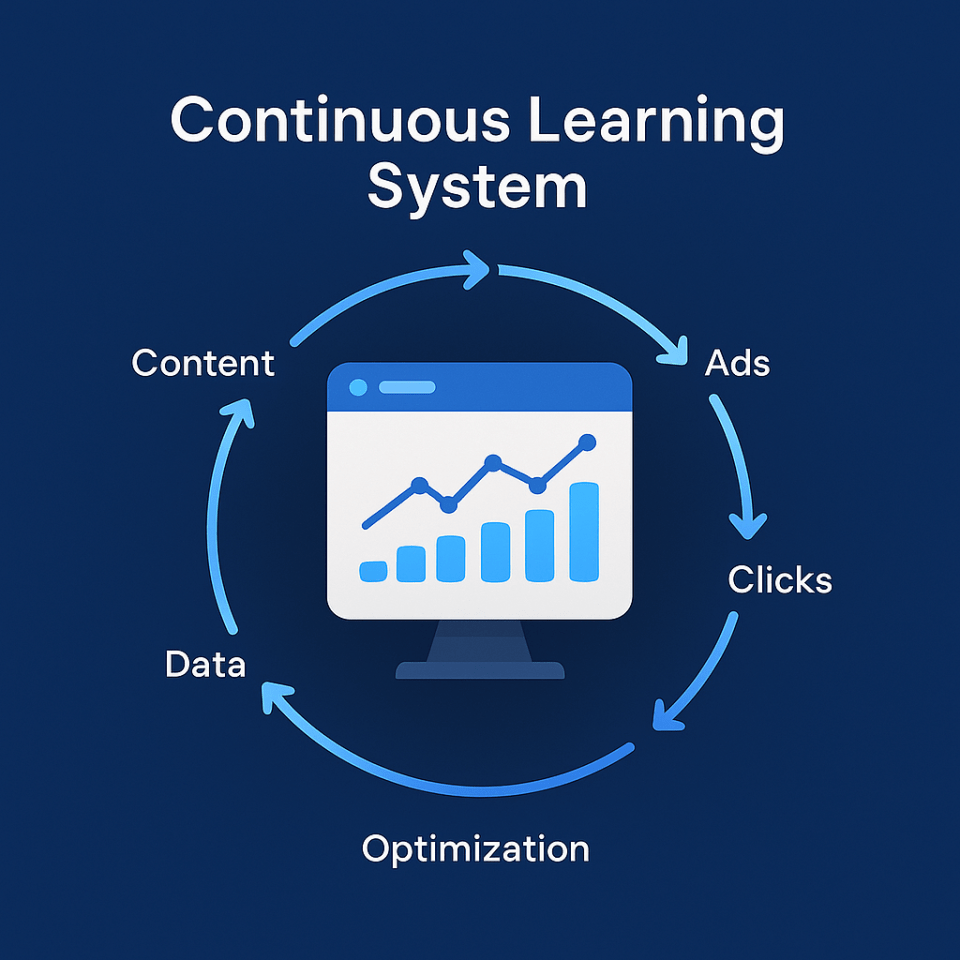
Every impression, every click, and every user session feeds back into Google’s machine learning models. AdSense uses this data to improve future ad placements.
- Ads that perform well on certain pages get prioritized more often.
- Advertisers refine their targeting based on where their campaigns perform best.
- Over time, the system learns which combinations of content and audience yield the best results for everyone involved.
This constant feedback loop means the more quality traffic you drive, the more accurate and profitable your ad targeting becomes.
6. Why This Matters for Publishers
For publishers, this process explains why two sites with similar traffic numbers can have vastly different AdSense earnings.
Google’s system rewards:
- Clear, high-quality content
- Consistent topic focus
- Engaged, intent-driven audiences
- Good user experience across devices
If your site’s content and design make it easy for Google to understand your niche and for users to stay engaged, your ad inventory becomes more competitive—and more valuable.
In essence, AdSense doesn’t just reward traffic volume; it rewards clarity, relevance, and trust.
What Influences AdSense Revenue
Once a website starts displaying ads through AdSense, many publishers expect a steady stream of income to follow. But what they quickly realize is that ad revenue is anything but static.
Two publishers can have the same amount of traffic and still earn dramatically different amounts. The reason lies in the dozens of variables that influence how much advertisers are willing to pay and how efficiently your site converts impressions into revenue.
Understanding these variables isn’t just about chasing higher numbers — it’s about learning how to position your content, traffic, and user experience in ways that make your inventory more valuable in Google’s advertising ecosystem.
1. Your Website’s Niche and Audience Intent
Your niche is arguably the single biggest determinant of AdSense performance. Advertisers don’t bid the same amount for every type of audience.

Industries such as finance, insurance, technology, and healthcare attract high CPC (Cost Per Click) rates because the potential return for advertisers is high, a single customer could be worth hundreds or even thousands of dollars.
On the other hand, lifestyle, entertainment, or general hobby sites often attract lower bids. These niches may generate more impressions, but advertisers tend to pay less per click because their campaigns are brand awareness-oriented rather than conversion-focused.
What matters just as much as your topic is audience intent. A reader searching for “best CRM software for startups” has purchase intent. A reader browsing “funny startup memes” does not. The first attracts premium bids; the second gets filler inventory.
So, if you’re optimizing for revenue, create content that answers specific, high-intent queries in your niche. That’s what advertisers value most.
2. Traffic Volume and Quality

Traffic quantity gets attention. Traffic quality gets paid.
AdSense rewards websites that bring in consistent, organic, and engaged traffic. Visitors who arrive through search engines or direct bookmarks tend to interact more naturally with ads compared to those coming from social media clicks or low-quality referral sites.
Here’s why:
- Organic visitors are already looking for something specific.
- Referral or social visitors often have short attention spans.
- Bot or incentivized traffic can lead to invalid clicks, which Google penalizes.
AdSense algorithms are built to detect suspicious activity. If too many of your clicks come from unreliable sources, you risk reduced ad relevance or even a temporary revenue hold.
For publishers, this means focusing on content-driven SEO traffic and longer on-site engagement metrics (like time on page and scroll depth) rather than just chasing numbers through viral spikes or cheap traffic sources.
3. User Geography

Not all traffic is valued equally. Advertisers pay vastly different rates depending on where your visitors are located.
- Tier 1 countries (like the U.S., U.K., Canada, Australia, Germany) typically command the highest CPC and CPM rates.
- Tier 2 and Tier 3 markets (like India, Indonesia, or Nigeria) have lower advertiser competition, resulting in cheaper bids.
This is why a U.S.-based finance site might earn $15 per 1,000 pageviews while an Indian entertainment blog earns less than $1 for the same traffic.
If your audience skews heavily toward regions with lower ad spending, consider diversifying content or creating localized versions for higher-value markets.
4. Ad Placement and Layout Design

Where you place your ads matters as much as what you write.
AdSense uses viewability — the likelihood that an ad is actually seen — as a major factor in determining value. Ads “above the fold” (visible without scrolling) generally earn more than those buried below.
However, there’s a fine line. Overloading a page with ads, misleading placements, or intrusive pop-ups can hurt user experience and violate AdSense policy.
A strong approach is to:
- Keep ads integrated naturally within your design.
- Use in-content or in-feed ads that blend with the reading flow.
- Test ad density with A/B experiments using AdSense Auto Ads or manual layouts.
Ultimately, your layout should balance user engagement with monetization potential — not one at the expense of the other.
5. Page Speed and Technical Optimization

Every second counts. If your website takes too long to load, users bounce before ads can even render — and that’s lost revenue.
Page speed affects:
- Ad impressions: Slow-loading ads may not count as served.
- User experience: Faster sites retain more readers.
- Search ranking: Google prioritizes page speed in SEO, indirectly influencing your AdSense traffic volume.
Use tools like Google PageSpeed Insights or Lighthouse to identify issues with image compression, script order, or unused CSS. Consider lazy-loading ads and optimizing Core Web Vitals (especially LCP and CLS) for a measurable performance boost.
6. Ad Type and Format

Not all ad types perform equally. Some are designed for visibility, while others focus on engagement.
Common formats include:
- Display ads — standard banners and responsive placements.
- In-article ads — appear seamlessly within content.
- In-feed ads — appear inside lists or article grids.
- Anchor and vignette ads — mobile-friendly overlays and interstitials.
Experiment with different types and placements, but remember: consistency matters more than novelty. Users should learn to expect your ad pattern without being overwhelmed by it.
7. Policy Compliance and Content Quality

Even the best-optimized site can lose revenue if it violates AdSense policies.
Google prioritizes brand safety, which means:
- Avoid misleading headlines, adult themes, or violent content.
- Keep your site navigation clear and transparent.
- Do not manipulate clicks or incentivize ad engagement.
In addition, sites with thin or AI-generated content without value often see lower ad quality scores. Google’s algorithms reward trustworthy, well-written, and regularly updated content — the kind that keeps users coming back.
8. Seasonality and Market Fluctuations

Ad spending changes throughout the year. For example:
- Q4 (October to December) often sees a surge in ad budgets due to holiday marketing.
- Q1 tends to drop off sharply as advertisers reset budgets.
Your AdSense revenue will likely reflect these market cycles. It’s not a performance problem — it’s just how the ad economy moves. Smart publishers track these trends and plan content or campaigns around high-demand seasons.
The Publisher’s Takeaway
AdSense earnings are the result of hundreds of micro-interactions — between your content, audience, layout, and advertiser demand.
You cannot control every factor, but you can control the quality of your content, the trustworthiness of your audience, and the experience you create.
If your goal is sustainable monetization, optimize for value creation, not just ad clicks. Because at the end of the day, Google rewards publishers who make the web better — not just busier.
The Main Ad Formats Available in AdSense
One of the strengths of Google AdSense is its flexibility. It doesn’t limit publishers to a single type of ad or placement. Instead, it offers multiple formats designed to fit different kinds of content, user experiences, and layouts.
But as with everything in advertising, not all formats perform equally. Choosing the right ones—and using them strategically—can have a measurable impact on both user satisfaction and revenue.
Let’s break down the main ad formats available in AdSense, how they work, and when they make the most sense for publishers to use.
1. Display Ads

Display ads are the classic banners most people think of when they imagine online advertising. These are visual creatives that can appear across different parts of your page: header, sidebar, in between paragraphs, or at the end of an article.
They are responsive by default, meaning they automatically adjust their size and orientation to fit the available space, whether the user is on a desktop, tablet, or mobile device.
Best for:
- Publishers with flexible, visually clean layouts
- Content-heavy sites like blogs, magazines, or educational portals
Pro tip: Avoid stacking multiple display ads on a single page. One or two well-placed units—especially within the first scroll depth—perform better than cluttered layouts that fatigue the user’s attention.
2. In-Feed Ads

In-feed ads are designed to blend seamlessly into your website’s feed—the list of articles, news stories, or product listings.
They look like part of your content structure but are labeled as “Ad” for transparency. Because they mimic native elements of your site, users are more likely to engage with them without feeling interrupted.
Best for:
- Publishers with list-style layouts (like news sites, blogs, or product catalogues)
- Websites with infinite scroll or card-based designs
Pro tip: Match the font and color scheme of your in-feed ads to your site’s branding. It improves cohesion and increases click-through rates without violating Google’s guidelines for deceptive formatting.
3. In-Article Ads

In-article ads appear within the body of your content, usually between paragraphs. They are ideal for breaking up long blocks of text while keeping the reading experience intact.
Unlike banner ads, these units are lightweight and optimized for mobile, often featuring simple text and minimal visuals.
Best for:
- Long-form articles, guides, or blog posts
- Publishers aiming for higher engagement without overwhelming visuals
Pro tip: Place in-article ads after sections where readers naturally pause—like after subheadings or key takeaways. That’s when attention resets, making users more receptive to new visual elements.
4. Anchor Ads

Anchor ads “stick” to the edge of a user’s screen—either at the top or bottom—and stay visible as they scroll through the page. They’re part of AdSense’s Auto Ads suite and are optimized for non-intrusive visibility.
Anchor ads work well for mobile users, as they occupy a small, fixed space without disrupting navigation. On desktop, they can also appear at the top of the viewport.
Best for:
- Publishers with mobile-first traffic
- Sites with short content pages where static ads might not get enough exposure
Pro tip: Avoid using anchor ads on pages with sticky navigation bars or chat widgets. Overlapping elements can frustrate users and reduce engagement.
5. Vignette Ads

Vignette ads are full-screen ads that appear when a user navigates between pages on your site. They’re part of the Auto Ads family and are only shown between content, never interrupting it.
These ads are typically high-value because they capture full attention without replacing the page content itself. Google ensures they are skippable after a short duration to maintain user experience standards.
Best for:
- Publishers with multi-page articles, galleries, or forums
- Websites that see frequent internal navigation (e.g., “next article” or “continue reading” structures)
Pro tip: Use Vignette ads sparingly. While they can increase CPMs, overexposure can lead to user fatigue and lower return visits if not balanced properly.
6. Multiplex Ads (formerly Matched Content)

Multiplex ads replaced the old Matched Content feature, which used to promote your own internal articles. The new version allows for content-style ad recommendations that combine both your site’s posts and relevant sponsored placements.
They appear as grids or carousels at the end of an article and are ideal for keeping users engaged while adding a monetization layer.
Best for:
- Publishers with high-traffic blogs or editorial sites
- Long-session platforms where readers consume multiple pages per visit
Pro tip: Keep your Multiplex ad area visually consistent with your site’s recommendation widgets. This ensures smooth flow and helps prevent banner blindness.
7. Auto Ads

Auto Ads take automation to another level. Once you add a single script to your website, Google’s machine learning decides where, when, and which ad formats to place for maximum performance.
It analyzes your site’s structure, layout, and traffic behavior to find optimal placements. Over time, it adapts based on what drives the best engagement and revenue.
Best for:
- Small publishers or beginners who don’t want to manage placements manually
- Sites with dynamic layouts or frequently updated content
Pro tip: Use Auto Ads in combination with a few manual placements for control. That way, you benefit from Google’s optimization while maintaining editorial oversight over premium placements.
Balancing Variety and Experience
Using every available format at once might seem tempting, but the most successful publishers know restraint is key. Too many ad types can lead to visual noise and slow load times.
Instead, treat ad formats like instruments in an orchestra: each should have a purpose, and when combined thoughtfully, they create harmony—not chaos.
Experiment, analyze, and adjust over time. AdSense provides detailed performance metrics per format, so you can quickly identify what resonates best with your audience.
Why Balance Matters
Too many ads drive people away. Too few leave money on the table.
Google penalizes “ad-heavy” pages that force users to scroll before seeing content. But pages with well-placed, contextual ads tend to perform better across every metric — click-through rate, time on site, and user trust.
A user who trusts your site doesn’t just read; they engage. And genuine engagement leads to more meaningful, higher-value ad interactions.
Signs Your Balance Is Off
- High bounce rate or short sessions
- Returning visitors dropping off
- CTRs falling even with strong impressions
These point to a layout that’s serving ads first and readers second.
How to Find the Right Mix
There’s no magic ratio, but a few rules always hold true:
- Lead with content, not ads.
- Place ads at natural breaks, not mid-sentence.
- Keep designs responsive and clean.
- Avoid pop-ups and overlapping elements.
- Test relentlessly — let data guide density.
UX as a Revenue Multiplier
A smooth user experience actually raises revenue.
Faster load times, clear content flow, and ad placements that feel native all improve engagement and viewability — which advertisers reward with higher bids.
You earn more when your readers feel less interrupted.
Common Mistakes Publishers Make
AdSense is simple to start but tricky to master.
Even experienced publishers make errors that quietly eat into revenue or put their accounts at risk. The platform rewards smart, compliant, and user-first strategies — not shortcuts.
Here are the mistakes that most publishers make, why they matter, and how to fix them.
1. Overloading Pages with Ads

The biggest misconception in AdSense is that “more ads mean more money.”
In truth, every additional ad unit divides attention, slows the page down, and risks overwhelming your audience.
When users land on a cluttered page filled with blinking banners and pop-ups, they bounce — and Google notices. Lower engagement leads to lower RPMs (revenue per thousand impressions), and advertisers start bidding less for your inventory.
Think of ads as seasoning, not the meal. You need enough to make it flavorful — not so much that it ruins the dish.
Fix: Keep ads purposeful. A few well-placed, above-the-fold units outperform a crowded page. Focus on relevance, visibility, and readability.
2. Ignoring Mobile Optimization

Over 70% of web traffic comes from mobile devices, yet many sites still look like they were designed in 2010. Misaligned banners, hidden text, or overlapping ad units are instant deal-breakers for mobile readers.
If users can’t scroll smoothly, see your content clearly, or accidentally tap an ad, Google flags it as a poor experience — which can affect not only AdSense revenue but also your search ranking.
Fix: Design mobile-first. Use responsive ad units, test placements on different devices, and check how ads behave across breakpoints. A clean, fast, mobile-friendly layout isn’t optional anymore — it’s survival.
3. Encouraging Clicks (Even Subtly)

This is where many publishers unintentionally cross the line.
Adding text like “Support us by clicking these links” or placing ads too close to navigation buttons may seem harmless, but it counts as click manipulation under AdSense policy.
Google treats invalid clicks as fraud. The result? Payment deductions, account suspension, or permanent termination — even if the clicks were “accidental.”
Fix:
Keep ads clearly separated from clickable site elements. Label them transparently. And never, ever nudge users toward interaction. In AdSense, honesty earns more than gimmicks.
4. Neglecting Content Quality

No amount of ad optimization can save low-quality content.
If your site is filled with thin, keyword-stuffed, or recycled material, advertisers won’t bid high to appear there. Google’s algorithms evaluate contextual trust — meaning, the perceived authority and usefulness of your content directly influence the ads you get and the rates you earn.
Even worse, AI-generated or spammy content can trigger reduced ad fill or account review.
Fix: Prioritize genuine value. Write content that informs, solves, or inspires. Use structured data, clear topics, and proper headings. Quality content attracts high-value advertisers — poor content attracts low bids or none at all.
5. Not Tracking or Testing

Setting up AdSense once and never revisiting it is like setting a sailboat adrift without a compass.
Without testing, you don’t know which ad sizes perform best, which placements drive engagement, or which pages earn the most.
Publishers who monitor their AdSense dashboards regularly tend to spot trends early — whether that’s declining CTRs, changes in traffic sources, or seasonality dips. The insights are all there; most just never look.
Fix:
Use AdSense Experiments or A/B testing tools. Test placement density, ad types, and layout variations. What gets measured gets improved.
6. Violating Policy (Often Without Realizing It)

AdSense’s policies are detailed and updated often — which means many violations happen unintentionally.
Ads placed too close to downloadable content, on pages with unmoderated comments, or on sensitive topics can all violate policy. Even user-generated content can get you flagged if not properly monitored.
Google’s system operates on strict brand safety principles. One policy breach can hurt your credibility — or your account entirely.
Fix:
Read Google’s AdSense Program Policies regularly. Ensure your design and content comply. If you host user content, use filters or moderation tools. Prevention is easier than appeal.
7. Ignoring Site Speed

Page speed isn’t just a UX factor — it’s a revenue factor.
If your pages take too long to load, ads don’t render in time, users leave, and impressions drop. Every second of delay can mean lost earnings.
Heavy ad scripts, large media files, and unoptimized themes are common culprits.
Fix:
Audit your site with Google PageSpeed Insights or Lighthouse. Enable lazy loading, compress images, and remove unnecessary plugins or scripts. A fast site keeps both Google and your audience happy.
8. Treating AdSense as the Only Revenue Source

AdSense is powerful, but it’s not infallible.
Seasonal dips, algorithm updates, or policy reviews can cause unpredictable fluctuations. If AdSense is your only source of income, a single change can hit your bottom line overnight.
Smart publishers diversify — combining AdSense with affiliate programs, sponsorships, direct ad sales, or subscriptions. That way, if one stream slows, another keeps flowing.
Fix: Think beyond AdSense. Use it as part of a broader revenue mix, not the entire plan. The healthiest publisher models rely on multiple monetization pillars. You can work with a publisher partner like UndrAds to explore and increase chances of getting better and higher paying bidders.
The Publisher’s Takeaway
AdSense rewards consistency, not shortcuts.
Most of these mistakes stem from impatience — publishers trying to outsmart a system that’s designed to favor long-term, user-first thinking.
Avoiding these pitfalls won’t just protect your account — it’ll build a stronger, more sustainable business model around your content.
Because successful publishing isn’t about gaming algorithms. It’s about respecting your readers, your platform, and the ecosystem that keeps both alive.
Pros and Cons of Using AdSense as a Publisher
Google AdSense is one of the most accessible monetization tools ever created for publishers.
It bridges the gap between advertisers and creators without the complexity of contracts, ad servers, or manual management.
However, like any platform that promises simple revenue, it comes with trade-offs.
Understanding both sides, the strengths and the limitations, helps publishers set realistic expectations and make smarter monetization decisions.
The Pros
1. Easy to Start, Easier to Scale
AdSense removes traditional barriers to entry.
You do not need direct relationships with advertisers or advanced technical knowledge. Once approved, you can place a single piece of code on your site to start showing ads. Google manages everything from delivery to payment.
For small or mid-sized publishers, this simplicity makes it an ideal starting point.
2. Massive Advertiser Network
AdSense connects you to Google’s entire network of advertisers, which includes millions of campaigns competing for space.
This means you do not need to find advertisers yourself because they are already bidding for placements on your site.
This wide demand ensures that your ad inventory rarely sits empty. Even in smaller niches, Google’s targeting system matches your content with relevant advertisers around the world.
3. Reliable Payments and Reporting
Google handles billing, fraud prevention, and payouts.
You receive transparent reports, consistent monthly payments, and detailed insights into your earnings.
This dependability is one of the reasons many publishers continue to use AdSense even after expanding into larger ad management solutions.
4. Contextual and Behavioral Targeting
AdSense uses algorithms to match ads with both your content and your audience’s interests.
This creates a relevant and seamless experience that benefits users, advertisers, and publishers alike.
Well-matched ads improve click-through rates, build trust, and make advertising feel like a natural part of the browsing experience.
5. Integration with Other Google Tools
If you already use Google Analytics, Search Console, or YouTube, AdSense fits right in.
You can track traffic, engagement, and ad performance in one place. This makes it easier to optimize both SEO and revenue strategies simultaneously.
The Cons
1. Lower Revenue Share Compared to Direct Deals
Google keeps about 32 percent of display ad revenue.
While this covers automation and access to Google’s vast network, publishers with large, loyal audiences often earn more by selling ad space directly to brands.
AdSense offers convenience, but that convenience comes at a cost.
2. Limited Control Over Ads
You can block certain ad categories or individual URLs, but you cannot select specific advertisers or negotiate custom pricing.
Occasionally, irrelevant or low-quality ads may appear, which can impact your brand image if you do not monitor regularly.
Publishers who value brand consistency or editorial control may find this limiting.
3. Strict Policies and Risk of Suspension
AdSense enforces very strict compliance standards.
Even small mistakes, such as accidental clicks or misleading ad placements, can lead to warnings or suspension.
Once suspended, accounts are extremely difficult to reinstate.
The platform works best for publishers who prioritize transparency, compliance, and quality over short-term gains.
4. Dependency on Google’s Algorithm
Your revenue depends on Google’s ad delivery systems, advertiser demand, and ongoing algorithm updates.
If these variables change, your earnings can fluctuate significantly, sometimes overnight.
For publishers who depend solely on AdSense, this unpredictability makes long-term revenue planning challenging.
5. Not Ideal for Every Type of Publisher
AdSense works best for content-driven sites such as blogs, news platforms, educational resources, or niche communities.
Websites that rely on tools, product pages, or minimal content often see limited results because there is less contextual information for Google to target.
In short, AdSense performs best when paired with strong, original, and regularly updated content.
The Balanced View
AdSense should be viewed as a foundation rather than the end goal.
It is a great way to start earning revenue without external help, but it should not be your only strategy.
Use it to build early stability while expanding into other channels such as:
- Programmatic direct deals
- Header bidding
- Sponsored content
- Affiliate marketing
- Subscription models
The publishers who succeed with AdSense are the ones who treat it as one part of a larger monetization ecosystem rather than a single solution.
Beyond AdSense: When to Level Up
Once a publisher reaches consistent traffic and stable performance, the next logical step is to move beyond AdSense and explore options such as Google Ad Manager (GAM), header bidding, or direct ad sales.
Google Ad Manager allows more control over inventory, ad frequency, and partnerships with multiple ad exchanges. Header bidding introduces competition among demand sources, often increasing CPMs. Direct sales allow publishers to negotiate rates and ad placements directly with advertisers, bypassing intermediaries altogether.
AdSense may start the monetization journey, but it does not have to be the final destination.
Conclusion: The Future of AdSense and Publisher Monetization in 2025
The internet has changed faster in the last five years than it did in the previous fifteen.
User behavior, privacy laws, and technology have all evolved — and digital advertising has been forced to evolve with them.
Google AdSense, once the simplest way to make money from content, is now just one piece of a much larger and more complex ecosystem.
AdSense in 2025: Still Relevant, But Not Enough
AdSense is still one of the easiest and most reliable ways for publishers to earn revenue online.
Its automation, scale, and access to global advertisers make it an unmatched entry point. But it is no longer the whole game.
The way users consume content has shifted. Audiences are fragmented across formats — articles, short videos, newsletters, communities, and podcasts. Advertisers now demand measurable engagement, not just impressions. That means publishers must adapt beyond static display ads.
AdSense will remain valuable, but only for publishers who combine it with smarter strategies that prioritize quality, user trust, and diversification.
Privacy, Personalization, and the Post-Cookie World
With third-party cookies fading out, AdSense and Google Ads are leaning heavily on first-party data and contextual targeting.
Publishers who build loyal audiences — through subscriptions, email lists, or registered users — will have a major advantage.
The future of monetization isn’t just about serving ads. It’s about understanding your audience deeply enough that ads (and offers) feel like extensions of your content, not interruptions.
In 2025, contextual precision and ethical personalization will define high-performing publishers.
Diversification Is No Longer Optional
The smartest publishers are already building layered revenue models.
They use AdSense to generate passive income, but they don’t stop there. They build multiple streams that reinforce one another — ad sales, branded content, affiliate programs, community memberships, and direct sponsorships.
AdSense can fund the foundation, but brand equity fuels the growth.
The goal is not just to monetize impressions but to monetize relationships.
What Will Set Publishers Apart
Looking ahead, successful publishers will have three things in common:
- Authentic content ecosystems. They publish content that feels human, valuable, and trustworthy.
- Diversified revenue strategies. They balance automation (like AdSense) with direct monetization.
- A strong understanding of data. They track, test, and iterate constantly — treating analytics as strategy, not as a report.
The gap between “content creators” and “media businesses” is closing fast. In 2025, every publisher is both.
The Final Takeaway
AdSense still deserves its place on the publisher’s toolkit — but it’s not a finish line; it’s a launchpad.
It offers reach, consistency, and automation that few tools can match, but long-term success will depend on how well publishers adapt beyond it.
Those who build with balance, diversify their monetization, and stay rooted in quality will thrive — with or without an algorithm.
Because no matter how the ad tech landscape changes, one truth stays constant:
the publishers who understand their audience best will always win.


