The strongest AdMob alternatives depend on what you need to change. AppLovin MAX, Unity LevelPlay and Appodeal are options for managing mediation. Networks such as Unity Ads, InMobi and Mintegral can supply additional demand. Tapjoy introduces an offerwall for apps with a virtual currency economy.
Start by identifying the gap in your current setup. A mediation migration, another bidder and an offerwall each require a different test.
Google AdMob already supports multiple third-party ad sources through bidding and waterfall integrations. Adding demand can therefore be possible within the account you already use. Google’s supported ad sources explain the available integration paths.
AdMob alternatives at a glance
This shortlist groups products by their role. The order follows those roles and does not represent a measured revenue ranking.
| Option | Role | When to consider it | Main consideration |
|---|---|---|---|
| AppLovin MAX | Mediation platform | Evaluating a different auction and network-management setup | SDK, adapter and partner-account work |
| Unity LevelPlay | Mediation platform | Comparing mediation options for a game or app | Separate LevelPlay from legacy ironSource Ads products |
| Appodeal | Mediation platform | Evaluating a packaged multi-network setup | Review included dependencies and account configuration |
| Unity Ads | Ad demand source | Testing additional banner, interstitial or rewarded demand | Use the current supported bidding integration |
| InMobi | Ad demand source | Testing banner, native, interstitial or rewarded demand | Integration and account requirements vary by route |
| Mintegral | Ad demand source | Adding another bidder or waterfall source | Validate supported formats for your OS and adapter |
| Pangle | Ad demand source | Testing demand in supported markets | Regional mappings, access and formats differ |
| DT Exchange | Ad exchange and demand source | Testing another source within mediation | Confirm the integration supported by your platform |
| Amazon Publisher Services | In-app bidding service | Adding Amazon and other connected demand | Qualification, SDK integration and commercial terms |
| Tapjoy Offerwall | Reward-based monetization | Apps where users can earn virtual currency | Reward delivery, placement and economy design |
The product sections below link to official documentation. Availability and format support should be checked against your app’s operating system and integration before release.
Mediation platforms to evaluate
1. AppLovin MAX
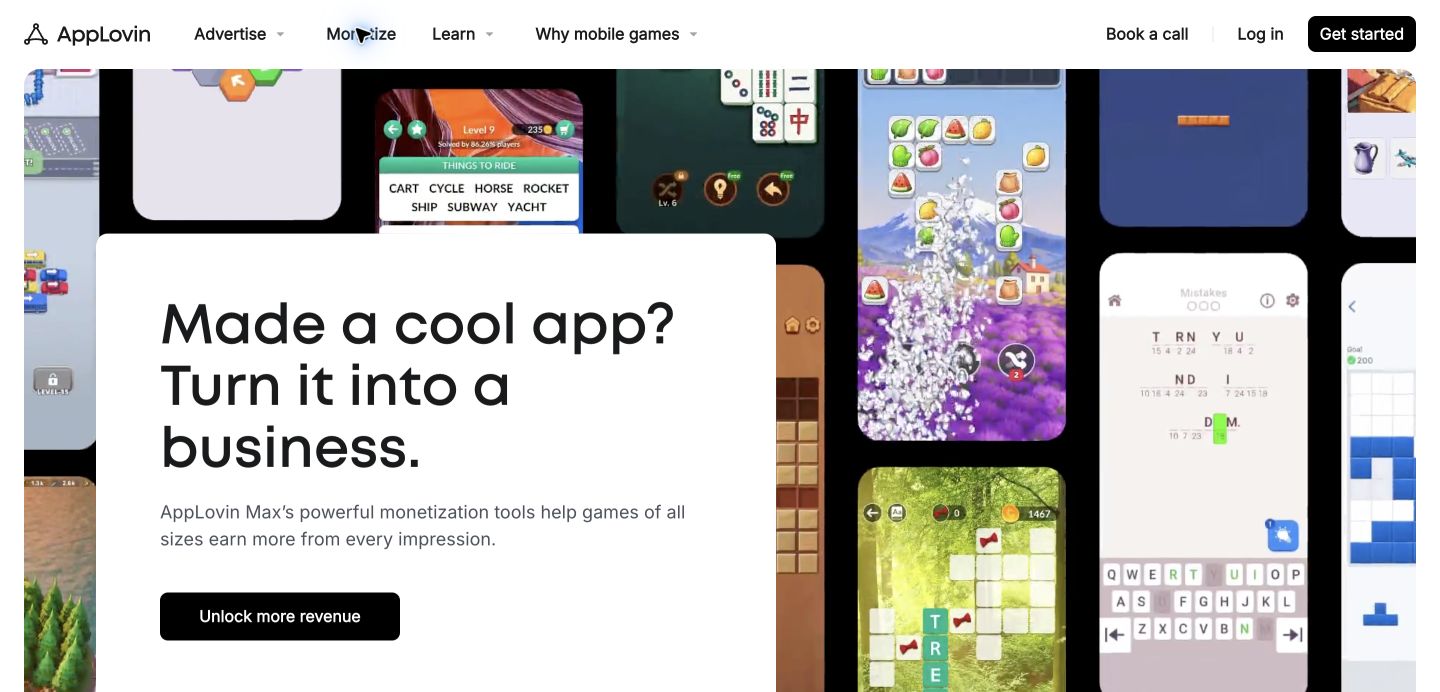
MAX is a candidate when you want to change how multiple demand sources compete for your inventory. Its documented setup includes in-app bidding, traditional mediation and automated CPM updating for supported networks. MAX’s getting-started guide covers the configuration and testing process.
Consider MAX when: you have a clear reason to evaluate a different mediation platform and the engineering capacity to maintain the integration.
Allow time for network credentials, adapters, ad-unit configuration and testing. MAX’s documentation also explains that mediated bidding networks have direct commercial relationships with publishers, including their own payment schedules. Network setup and payment responsibilities should be part of the comparison.
2. Unity LevelPlay
LevelPlay manages multiple ad networks through mediation. Unity documents the networks, supported formats and bidding arrangements in its mediated-network list.
Consider LevelPlay when: you are comparing mediation workflows, supported demand partners and integration requirements for your app.
For 2027 planning, check legacy ironSource components carefully. Unity announced that ironSource Exchange and iAds SDK ad delivery will shut down on 31 December 2026. Its announcement states that LevelPlay mediation remains supported. Publishers using affected components should follow the specific migration guidance in Unity’s sunset FAQ.
Keep those product names distinct when evaluating a migration.
3. Appodeal
Appodeal provides an SDK-based mediation setup with network configuration, segmentation and testing features. Its integration documentation explains the installation process and supported implementation steps.
Consider Appodeal when: you want to evaluate a packaged mediation setup and understand what its included services will add to your app.
Review the actual dependencies in the build, supported formats, reporting access and payment terms. Appodeal can also connect to an AdMob account, as described in its AdMob setup guide.
A single integration still needs a review of the networks and services it includes.
Demand sources you can add to a mediation stack
These options can provide demand through supported integrations. Their value should be measured against your existing setup, with geography, operating system and ad format held consistent.
4. Unity Ads
Unity Ads is an advertising demand source that can participate within a mediation setup, including AdMob. Google documents its integration, SDK requirements and supported formats in the Unity Ads mediation guide.
Consider Unity Ads when: you want to test another source for supported banner, interstitial or rewarded placements.
Use the current bidding path. Google’s guide flags Unity Ads waterfall mediation as deprecated and identifies 31 January 2026 as the end of waterfall support.
Measure the effect on total placement revenue and ad availability. A strong result from one network does not establish whether the whole placement improved.
5. InMobi
InMobi documents an AdMob SDK integration covering banners, interstitials, rewarded video and native ads. Its requirements include the relevant accounts, an InMobi agreement, and the SDK and adapter. InMobi’s AdMob guide explains that route.
Consider InMobi when: you want to evaluate additional demand for those formats while retaining your current mediation platform.
InMobi also documents server-side integration options. The setup requirements differ, so confirm which route is available for your account and inventory.
Assess results by country and format. Broad labels such as “best for emerging markets” are too vague to justify an integration.
6. Mintegral
Mintegral can be integrated into AdMob through bidding or waterfall configurations. Google’s Mintegral integration guide covers account setup, placement mapping, SDK installation and testing.
Consider Mintegral when: you have an identified demand gap and want to test another source on supported placements.
Check the format support for your operating system and current adapter. Start with a defined placement or audience segment so you can see whether the additional demand changes total revenue, latency or the number of ads successfully shown.
Keep the evaluation tied to your own inventory rather than a claimed universal CPM advantage.
7. Pangle
Pangle requires a closer look at regional availability. Its published supported-region list includes markets across several continents. India is absent from that list at the time of review.
Google also documents separate Pangle bidding sources for the United States, Korea and the rest of the world. Access conditions and supported formats depend on the integration. Google’s Pangle guide explains those distinctions.
Consider Pangle when: a meaningful share of your audience is in supported markets and your intended formats are available.
Confirm eligibility and regional mappings before committing development time.
8. DT Exchange
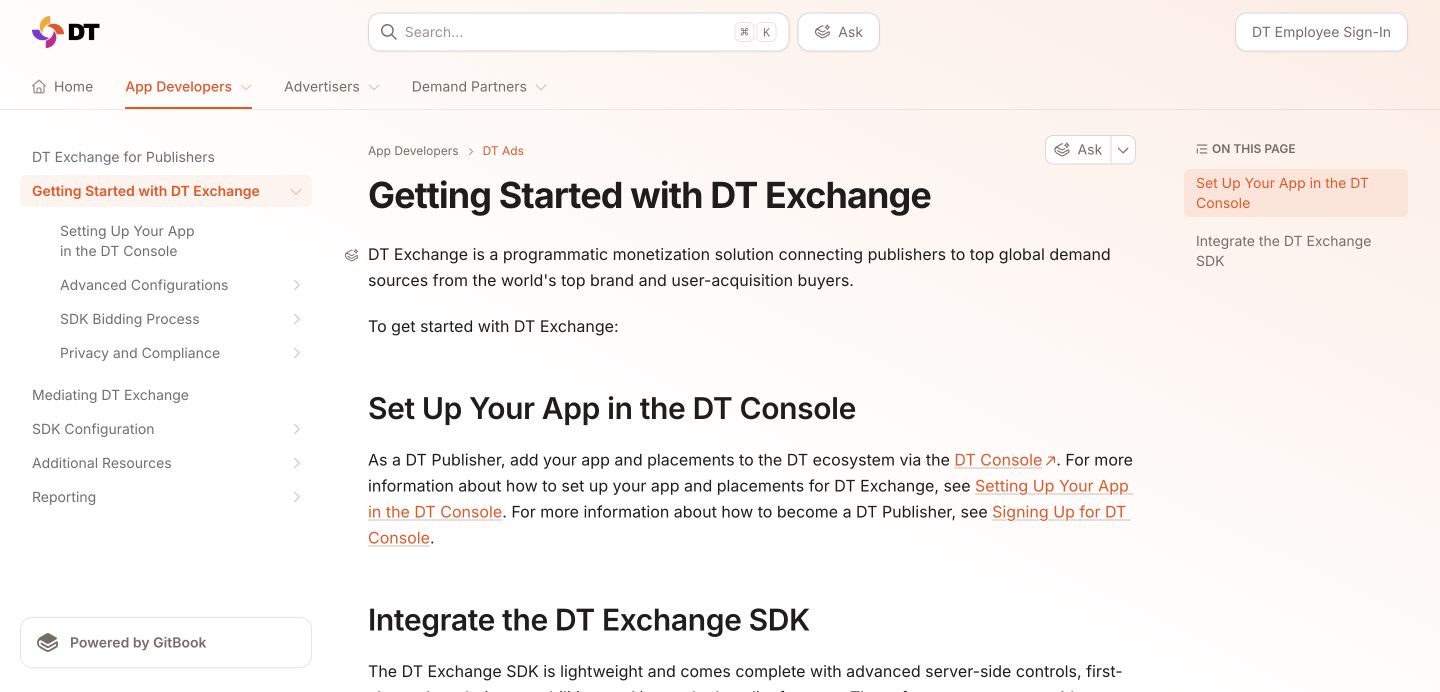
DT Exchange supplies advertising demand through supported mediation integrations. Google’s DT Exchange documentation covers the AdMob setup, SDK and adapter requirements, privacy configuration and testing.
Consider DT Exchange when: you want to evaluate another demand source within your existing auction.
Distinguish DT Exchange from Digital Turbine’s other products, including its mediation and distribution offerings. The product name matters when comparing capabilities.
Check the current guide for your operating system and framework. Support can differ between integration paths, so an Android configuration should not be assumed to apply unchanged to iOS or Unity.
9. Amazon Publisher Services
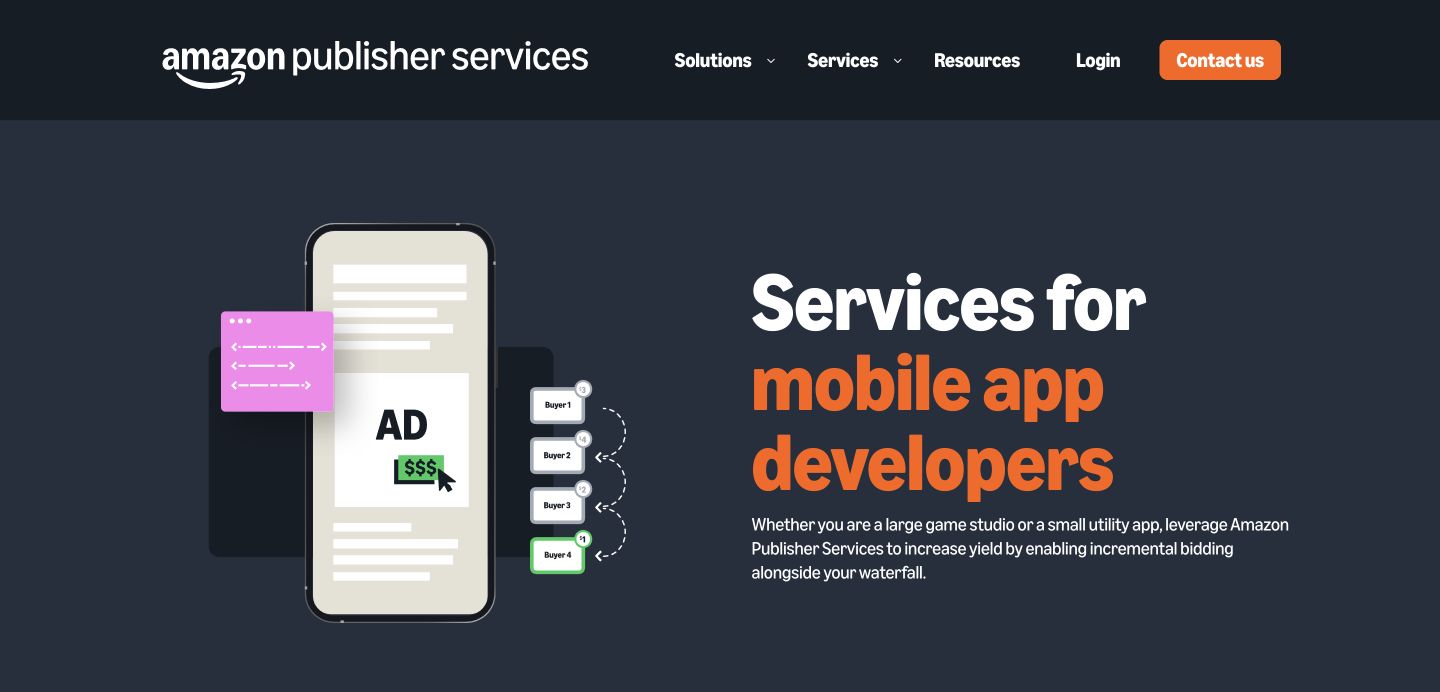
Amazon Publisher Services offers in-app bidding that connects publishers with Amazon demand and other demand partners. Its mobile publisher page describes how that demand can compete alongside an existing waterfall.
Consider APS when: you want to evaluate its demand access and can support the required integration and commercial relationships.
Amazon’s Transparent Ad Marketplace documentation identifies a separate SDK integration for in-app inventory.
Confirm qualification, supported formats, mediation compatibility and payment arrangements for the specific APS service you will use. Its suitability should be tested against your audience and inventory.
An offerwall option for apps with virtual currency
10. Tapjoy Offerwall
Tapjoy Offerwall lets users earn an app’s virtual currency by completing offers. Unity’s offerwall setup guide covers its SDK, currency configuration, placements and content cards.
Consider Tapjoy when: your app has a reward economy where additional currency has a clear purpose.
The work extends beyond displaying the offerwall. You need dependable reward delivery, a support process for missing rewards and a way to measure the effect on purchases and retention.
Tapjoy supports managed currency balances and a self-managed option using server callbacks. Choose the arrangement that fits your app’s existing currency system.
For placement decisions, see UndrAds’ guide to offerwall setup by game genre.
Where UndrAds fits
UndrAds belongs in the autonomous AdOps category. Its AdMob optimization service works with an existing setup to manage monetization operations.
That makes it relevant when your team needs help investigating performance changes, reviewing configuration and maintaining the stack you already run.
Before a pilot, define the supported actions, required permissions, integration method and rollback process. The integration requirements depend on your current stack.
Evaluate the pilot against an agreed baseline. Include total ad revenue, retention and operational effort, with a comparison group where feasible. Our guide to proving incremental AdOps revenue explains the measurement approach.
AdMob alternatives FAQ
Which AdMob alternative pays the most?
The answer requires a test on your inventory. Compare the final revenue paid to the publisher across equivalent countries, operating systems, formats and user groups. Include fees, reporting adjustments and any effect on retention. A higher reported eCPM alone is insufficient to establish the best result.
Can I use other ad networks alongside AdMob?
Yes. AdMob supports third-party demand sources through documented bidding and waterfall integrations. Requirements vary by network, including accounts, adapters, supported formats and privacy settings. Check the current supported ad-source documentation before building the integration.
Can I keep Google demand if I move to MAX or LevelPlay?
Google lists AppLovin MAX and Unity LevelPlay among the platforms supporting partner bidding. Its guidance requires dedicated partner bidding ad units and setup inside the third-party mediation platform. Existing standard AdMob ad units cannot be reused for that purpose. See Google’s partner bidding requirements.
Does UndrAds require replacing AdMob?
UndrAds’ AdMob optimization service supports working with an existing AdMob setup. Confirm the supported integration and scope of configuration changes for your app before starting. Keep the pilot’s permissions, comparison method and success criteria explicit. UndrAds’ service overview describes the intended role.
How to test an AdMob alternative
Choose a candidate after you can explain the problem it should solve. Low demand in a particular country, unreliable rewarded availability and excessive configuration work require different changes.
- Record a baseline. Break out revenue, impressions, ad requests and daily active users by country, operating system and format. Include retention and app stability.
- Define the change. Specify whether you are adding demand, changing mediation or introducing a reward format. Keep unrelated placement and frequency changes out of the same experiment.
- Check the complete terms. Confirm account eligibility, supported inventory, SDK requirements, payment timing and deductions. Record how the arrangement affects the revenue you actually receive.
- Validate delivery before measuring performance. Use the platform’s testing tools to check loading, display, rewards and reporting. Confirm that privacy choices reach the relevant partners.
- Compare equivalent user groups. Use a concurrent comparison where technically feasible. Keep users assigned consistently, and decide the sample requirements and stopping rules before examining results. Avoid judging a migration solely from a before-and-after comparison across different holiday demand periods.
- Review total value. Calculate ad revenue per daily active user and check retention, purchases, latency and support workload. For an offerwall, include reward disputes and any change in IAP spending.
For example, 10,000 impressions at a $10 eCPM generate $100. A setup delivering 6,000 impressions at a $12 eCPM generates $72. The higher eCPM produces less revenue in this example. User activity and retention still need separate evaluation.
If the current stack needs closer investigation, ask UndrAds to review your AdMob setup and identify a specific change to test before committing to a migration.